West Georgia and East Alabama see their share of severe weather, from spring tornado outbreaks to the remnants of Gulf hurricanes that push inland and dump enough wind and rain to bring down trees across entire neighborhoods. When that happens, property owners, contractors, and municipalities suddenly need equipment they weren't planning to rent that week, and the equipment that works best for storm cleanup isn't always the same lineup used for a planned construction project.
This article covers what actually helps most when clearing storm damage, from downed trees to debris piles to torn-up access roads, and how to think about renting the right equipment quickly when the need shows up without warning.
Why Storm Cleanup Is a Different Equipment Problem
A planned construction or land clearing project gives you time to assess the site, plan equipment needs, and schedule delivery around a known timeline. Storm cleanup doesn't offer any of that. A property can go from normal to covered in fallen trees, twisted debris, and blocked access roads in the span of an afternoon, and the equipment need becomes urgent immediately rather than building up over weeks of planning.
This urgency changes what matters most in the equipment decision. Speed of access, versatility across a range of debris types, and the ability to maneuver around damage that's often unpredictable in scope all take priority over the kind of careful, spec-by-spec equipment matching that goes into a planned project. Our guide on how local equipment rental teams solve problems faster speaks directly to this reality, since storm response is exactly the situation where a local rental relationship with fast turnaround matters more than almost anything else.
Skid Steers With Grapple Attachments
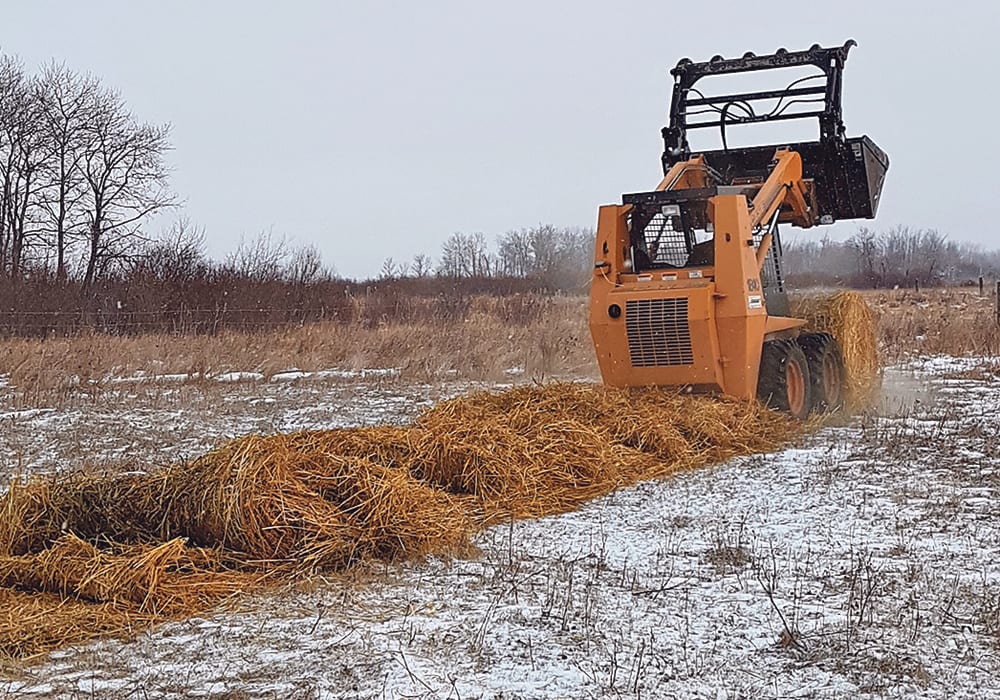
For clearing fallen trees, tangled brush, and general debris piles, a skid steer fitted with a grapple attachment is one of the most effective tools available. The grapple allows an operator to grab and move irregular, tangled material, exactly what storm debris tends to look like, far more efficiently than a standard bucket attachment designed for loose or uniform material.
Our guide on 5 must-have skid steer attachments for construction pros covers grapple attachments alongside other configurations worth knowing about, and for storm cleanup specifically, the grapple is usually the first attachment worth requesting if a property has significant tree and brush debris to clear.
Mini Excavators for Precision Work Around Damage
Storm damage rarely respects property lines or clean work areas. Downed trees often land across driveways, fences, outbuildings, and landscaping that the property owner wants to preserve, which means the equipment doing the clearing needs to work with precision in tight, damaged spaces rather than just brute force.
Mini excavators are particularly well suited to this kind of careful work, especially when access is limited by debris on multiple sides or when a machine needs to maneuver close to a structure without causing additional damage. Our comparison of mini excavators for Georgia: compact vs. standard is a useful reference for sizing the right machine to the space available, which matters even more in storm cleanup than in typical construction work, since the working area is often smaller and more obstructed than a planned job site.
Dozers vs. Skid Steers for Larger-Scale Clearing
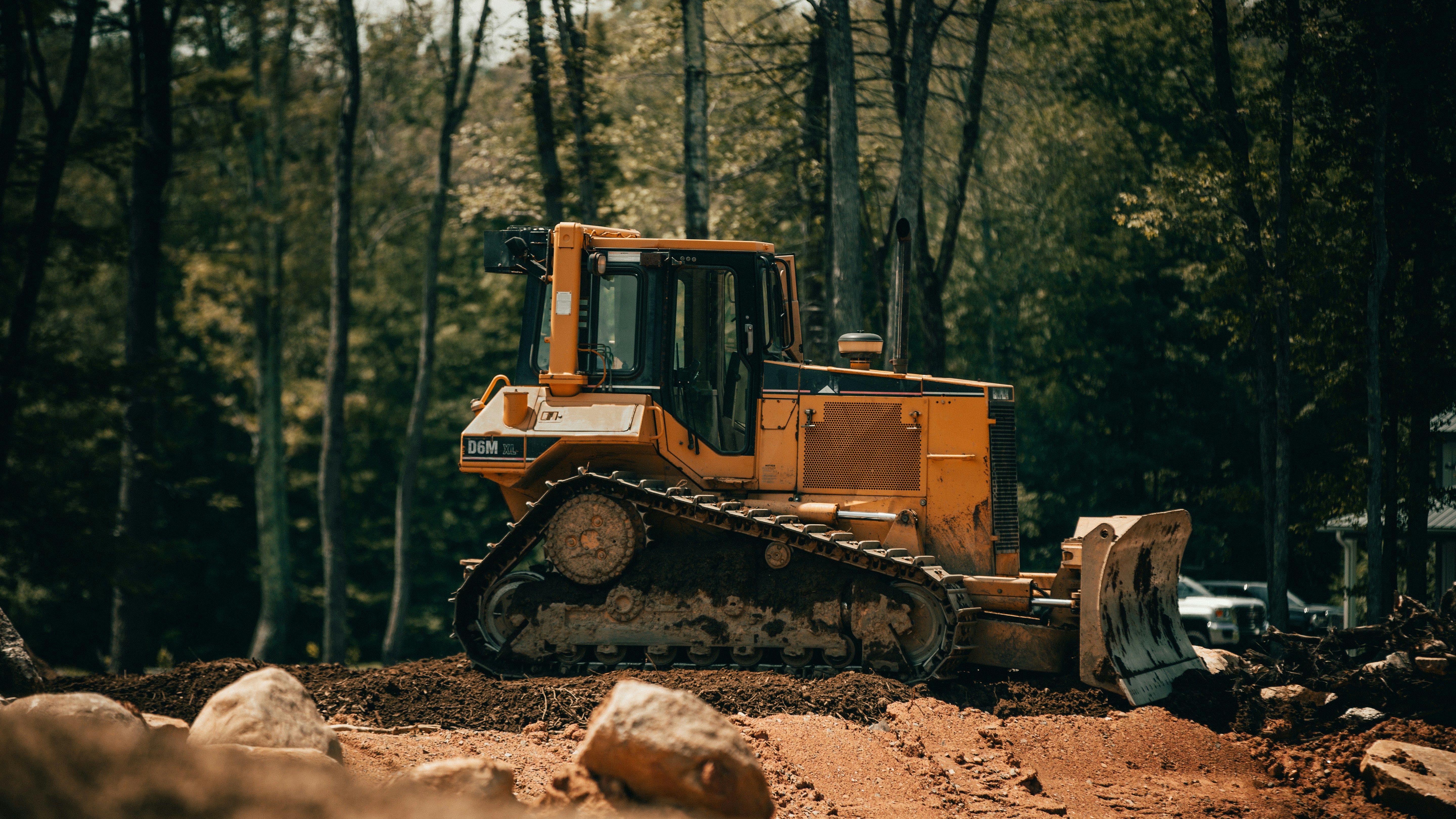
For larger properties or more extensive storm damage, particularly land that needs broader clearing rather than targeted debris removal around structures, the choice between a dozer and a skid steer becomes relevant in a different way than it does on a typical construction project. A dozer covers ground faster and handles heavier pushing work across an open area, while a skid steer offers more precision and maneuverability in tighter, more damaged terrain.
Our guide on dozer vs. skid steer: choosing the right machine for your project breaks down this decision in more detail, and the same framework applies to storm recovery, with the added consideration that storm-damaged ground is often less predictable underfoot than a planned construction site, which can shift the calculation toward the machine that offers more control.
Telehandlers for Loading and Moving Debris
Once trees and brush are cut and cleared into piles, getting that material loaded onto trucks or repositioned away from the property becomes its own logistical challenge. Telehandlers, with their reach and lifting capability, are effective for loading debris into trucks or dumpsters, particularly when material needs to be lifted over remaining obstacles or placed at a height a standard loader can't reach.
Our article on the top 5 telehandler uses for construction sites covers this equipment's versatility more broadly, and debris loading during storm recovery is a practical extension of the same lifting and reach capabilities that make telehandlers useful on a typical job site.
Clearing Access Roads and Driveways First
Before broader cleanup can even begin, many storm-affected properties need their access roads or driveways cleared first, since equipment, trucks, and even emergency vehicles often can't get in until a path is opened. This first-pass clearing usually calls for whichever machine can most quickly move blocking debris out of a direct path, often a skid steer or small dozer depending on what's actually blocking the way.
Our guide on prepping land for building: equipment rental guide covers site preparation principles that apply conceptually here as well, even though the context is different, since the underlying goal, clearing a workable path before the rest of the project can proceed, is the same whether the obstruction is undeveloped land or storm debris blocking a driveway.
What to Have Ready Before Storm Season
Property owners and businesses in the region can reduce a lot of the chaos that follows a severe storm simply by thinking through the equipment question before severe weather actually hits. Knowing which rental provider to call, having a rough sense of what equipment a property would need based on its layout and tree coverage, and understanding realistic delivery timelines during a regional weather event all shorten the gap between storm damage and actual cleanup starting.
This matters especially for businesses and municipalities managing larger properties or public rights of way, where the difference between a same-day equipment delivery and a multi-day wait can mean the difference between a road reopening quickly or staying blocked well after the storm itself has passed. Establishing that relationship with a local provider ahead of storm season, rather than during the scramble that follows a major weather event, is one of the simplest ways to shorten recovery time when it matters most.
Assessing Damage Before Equipment Arrives
A quick, honest assessment of what actually needs to happen on a property helps make better use of whatever equipment does arrive. Is the primary need clearing an access path, removing debris from around structures, or broader land clearing across a larger area? Are there downed power lines or other hazards that need to be addressed by utility crews before equipment operators can safely work in an area? Answering these questions before equipment shows up, even informally, helps a rental provider recommend the right machine and attachment combination rather than guessing based on limited information over the phone.
Renting vs. Owning for Infrequent Storm Events
Most property owners and even many contractors don't experience severe storm damage often enough to justify owning specialized cleanup equipment year-round. A grapple-equipped skid steer or a mini excavator that would otherwise sit unused for most of the year makes far more financial sense as a rental brought in specifically when the need arises.
Our comparison of heavy equipment rental vs. purchase covers this decision more broadly, and storm cleanup is one of the clearest cases where renting wins decisively, since the alternative, owning equipment that sits idle except during rare severe weather events, rarely makes financial sense for anyone outside of a company whose core business is disaster recovery work.
Why Uptime Matters Even More During Recovery
During storm recovery, every hour a piece of equipment sits idle due to breakdown or delay extends the time a property remains blocked, damaged, or unsafe. This makes equipment reliability and quick turnaround even more critical than during a typical planned project, where a short delay is inconvenient but rarely urgent in the same way.
Our article on reducing jobsite downtime through rental strategies and our guide on preventative maintenance and heavy equipment downtime both cover principles that apply directly here, and working with a rental provider who maintains equipment proactively and can respond quickly when something does go wrong matters more during an active recovery effort than during almost any other kind of project.
Final Thoughts
Storm cleanup asks something different of both equipment and equipment providers than a planned construction project does. Speed, versatility, and reliability matter more than the careful spec-matching that goes into a project with a known timeline, and having a rental relationship already in place before severe weather hits, rather than starting the search for equipment after a storm has already caused damage, makes a real difference in how quickly a West Georgia or East Alabama property can get back to normal. Whether it's a grapple-equipped skid steer clearing fallen trees, a mini excavator working carefully around damaged structures, or a telehandler loading debris for haul-off, matching the right equipment to storm recovery work is what turns a chaotic cleanup into a manageable one.