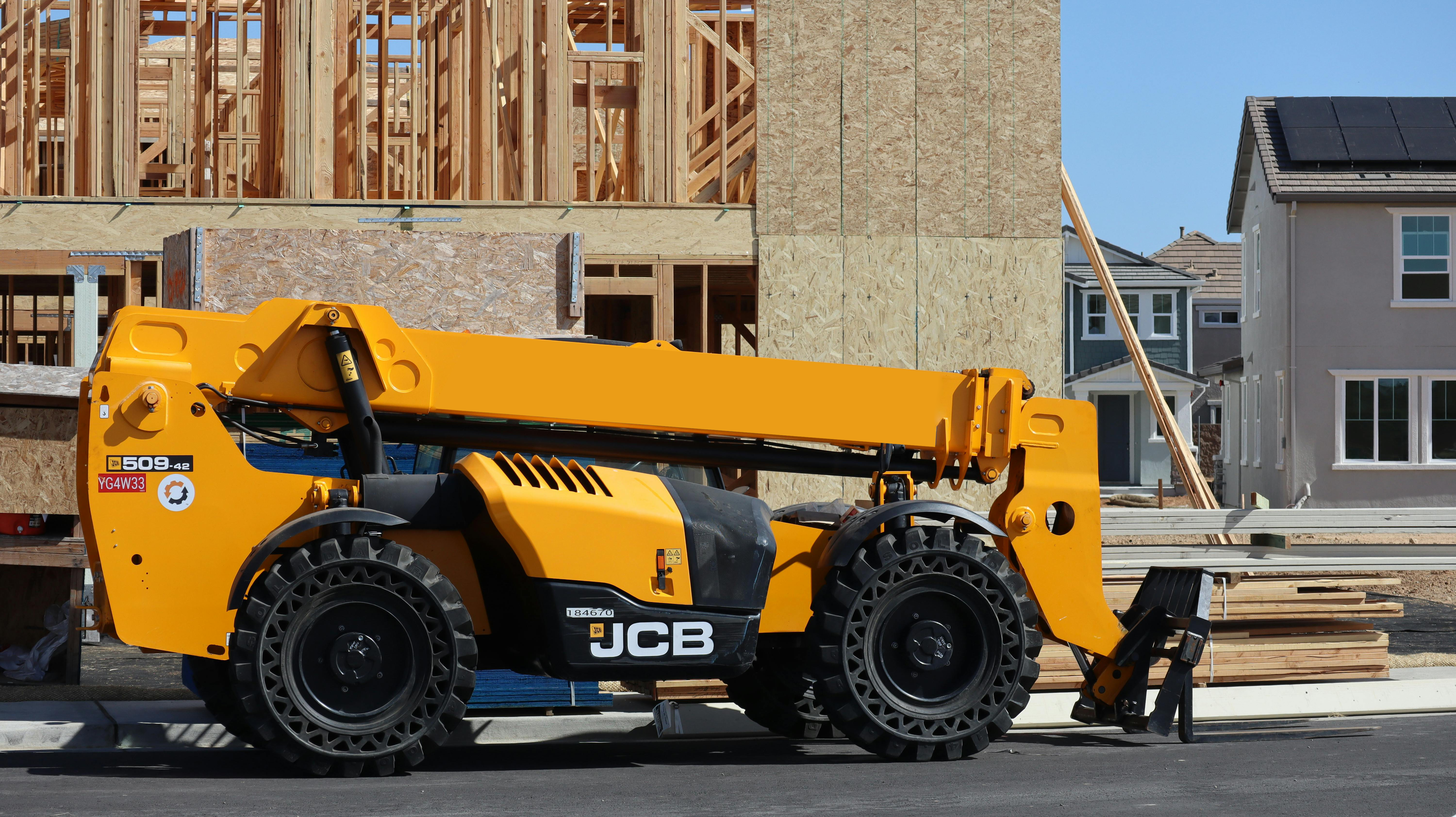
An indoor scissor lift is an electric machine built for flat, finished floors, while an outdoor scissor lift is usually a rough terrain model with large treaded tires and higher ground clearance. If you are searching for an outdoor scissor lift rental near me, the real question is what surface the lift will sit on. Smooth concrete points to an electric lift. Dirt, gravel, grass or a sloped pad points to a rough terrain machine.
Scissor lifts raise a platform straight up, so they suit ceiling work, lighting, electrical runs and signage. If you also need to reach over an obstacle, compare the two machine types first in our guide to boom lifts versus scissor lifts in Georgia and Alabama.
Is an Outdoor Scissor Lift Rental Near Me Right for Your Site?
Start with the ground. Electric scissor lifts are designed around smooth, compacted surfaces. Their tires are smaller and often non-marking, which protects finished floors but gives little grip in mud or loose gravel. Ground clearance is low, so a rut or a soft spot can stop the machine or put it out of level.
Some contractors do use electric lifts outside on a finished slab or a paved lot. The deciding factor is what the operator's manual and decals on that machine allow. Read them before you raise the platform. If the surface is questionable, choose a different machine or a different setup location.
What Is a Rough Terrain Scissor Lift?
A rough terrain scissor lift is an outdoor version of the same straight-up platform, built on a heavier chassis with aggressive tires and more ground clearance. Many models add four-wheel drive and a self-leveling system, and many run on diesel or gas instead of batteries.
These machines suit unfinished sites such as dirt pads, gravel yards and grassy areas. They typically carry more weight and fit more workers and material on the platform. They are also much heavier, which matters for transport and for soft ground.
Electric and Rough Terrain at a Glance
| Factor | Electric (indoor) | Rough terrain (outdoor) |
|---|---|---|
| Best surface | Smooth, level concrete | Dirt, gravel, graded pads |
| Tires | Small, often non-marking | Large and treaded |
| Power | Battery, no exhaust | Often diesel or gas |
| Typical use | Ceilings, lighting, interior fit-out | Exterior walls, steel, site work |
| Watch out for | Ruts, slopes, soft ground | Weight, transport, floor damage |
Live Oak Equipment lists two Skyjack scissor lifts on its scissor lift rental pages: a 19 ft model and the SJ4626 26 ft electric. Both are electric models. Confirm the permitted surface and operating limits in the specific machine's manual and decals before booking. If your job sits on raw dirt or a steep grade, call before you book so we can talk through the site.
How High Do I Need to Go?
Platform height is how high the platform floor rises. Working height is usually figured as platform height plus about six feet, since an average worker can reach above the rail. Rental listings often quote platform height, so check which number you are reading.
Here is a simple way to size the lift:
- Measure the height of the work itself, not the ceiling or roof line. A light fixture at 22 ft is what matters, even in a 30 ft building.
- Subtract about six feet for your own reach to estimate the platform height you need.
- Add margin if you will carry long material or cannot park the lift directly under the work.
- Check the doorways, aisles and gates the lift must pass through, plus the weight the floor can take.
- Confirm the platform capacity covers your crew, tools and materials together.
Here is a hypothetical example for illustration only. Say you are replacing shop lights mounted at 24 ft. Subtracting roughly six feet of reach leaves about 18 ft, so a 19 ft Skyjack scissor lift looks close. If you also need to set conduit at 28 ft on the same visit, the Skyjack SJ4626 26 ft electric scissor lift covers both tasks. Always confirm actual specifications against the machine's data plate and manual.
What Ground and Weather Conditions Matter?
Ground conditions matter as much as platform height. Before the lift arrives, walk the whole route from the drop point to the work area.
- Slope: check the grade limits shown on the machine for travel and for a raised platform.
- Firmness: soft shoulders, fresh backfill, septic fields and trench lines can give way.
- Obstacles: curbs, drop-offs, open trenches, holes and loose gravel limit where the lift can travel.
- Overhead hazards: power lines, tree limbs, canopies and eaves need clearance before you raise the platform.
Weather matters just as much outdoors. Wind pushes on a raised platform and on anything you hold up there, such as a sheet of plywood. Follow the wind and outdoor-use instructions in the specific machine's manual and decals. If conditions change, lower the platform and reassess the work area.
What Safety Checks Should I Do Before Using a Lift?
Before operating, follow the inspection and operating steps in the specific lift's manual and decals, along with your site's safety procedures. Repeat that review each day and again whenever the lift is moved to a new spot.
The manual and decals are also where you will find that machine's capacity, slope limits and outdoor-use limits. Ask your site supervisor which training, inspection and fall protection rules apply to your crew on that job.
Frequently Asked Questions
Indoor electric lifts have small, often non-marking tires and low ground clearance for smooth floors. Outdoor rough terrain lifts use large treaded tires, a heavier frame and more clearance for dirt and gravel. Each machine lists its own surface limits.
Our scissor lift pages list a Skyjack 19 ft lift and the Skyjack SJ4626 26 ft electric scissor lift. Both are electric models. Call us to confirm current availability and to talk through your site conditions before booking.
Gravel needs a model-specific surface review. Check the machine manual and decals for the permitted surface, grade and operating limits before using any lift on gravel. Loose or deep gravel and soft shoulders are common reasons an electric lift will not work.
The limit comes from the specific machine you rent. Check the decal and operator's manual on that lift for its wind and outdoor-use instructions, and lower the platform if conditions change while you are working.
Measure the actual work height, then subtract about six feet for a worker's reach from the platform. Add margin for long materials or an offset parking position. Also check door widths, floor capacity and the combined weight of your crew and tools.
Only within the applicable grade limit shown on that machine. Check the manual and decals for both the travel limit and the raised-platform limit before positioning the lift, since the two numbers are not the same.
Choosing Your Scissor Lift Rental
Start with the surface, then the height, then the load. A smooth, level floor points to an electric machine like the Skyjack 19 ft or the SJ4626, while raw dirt, gravel or a slope calls for a rough terrain machine. When contractors look for an outdoor scissor lift rental near me, the fastest answer comes from describing the site in a short phone call.
Have the surface, work height and dates ready when you call 706-392-9614, and we will help you match the right lift for your job in West Georgia or East Alabama. You can reach our team any time at Live Oak Equipment.