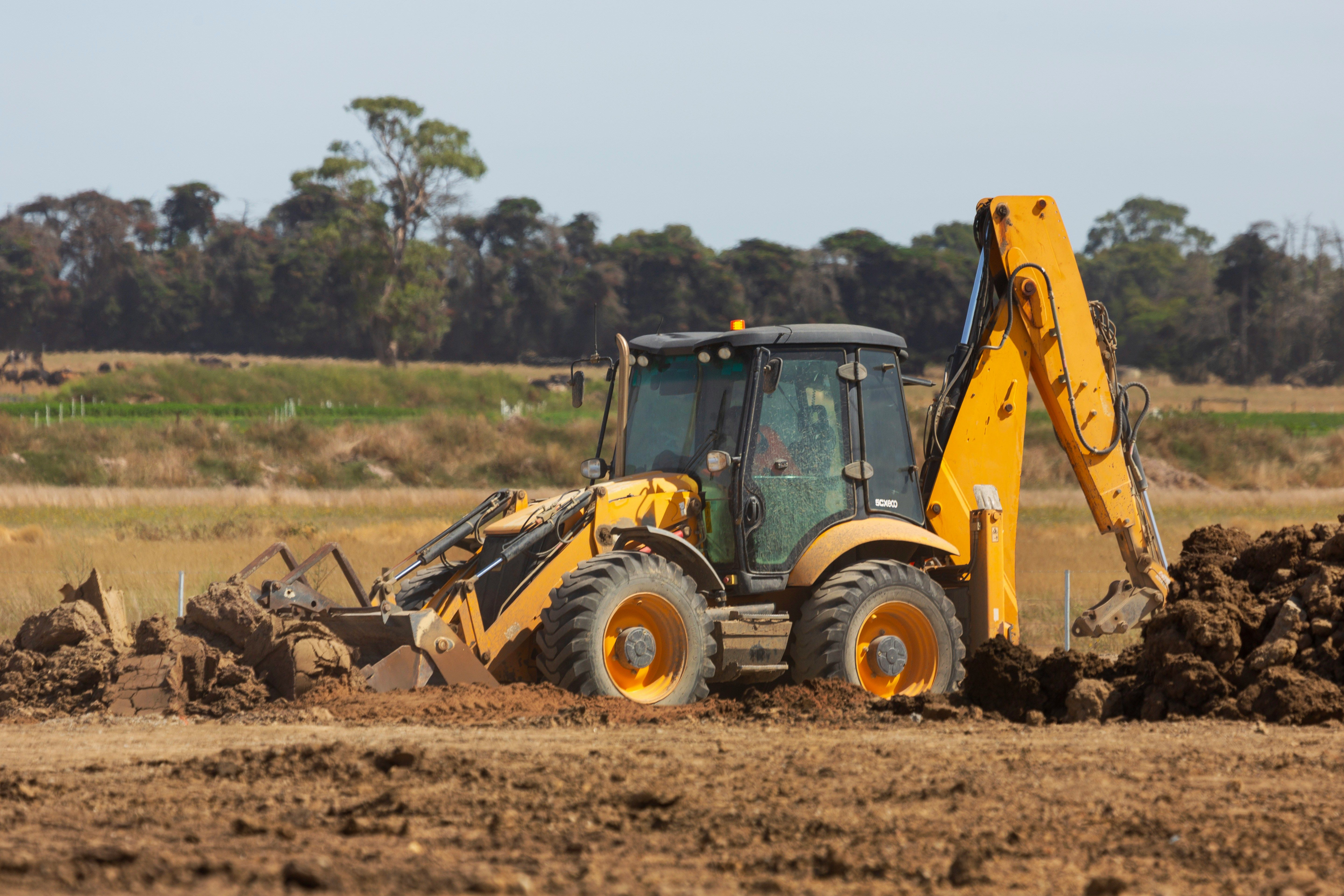
Earthmoving equipment tends to dominate project planning conversations, excavators, skid steers, telehandlers, and dozers all get careful consideration for a construction project. Concrete work has its own distinct equipment needs, and mixers, power trowels, saws, and vibrators each solve a specific part of a pour that the wrong or missing equipment can genuinely compromise, regardless of how well the earthmoving phase went before the concrete even arrived on site.
Concrete Mixers: Matching Capacity to Pour Volume
Portable and towable concrete mixers handle smaller pours where ordering ready-mix delivery doesn't make practical sense, sidewalks, small footings, fence post work, and similar limited-volume applications. Mixer capacity needs to match actual pour volume and crew pace, since an undersized mixer forces constant reloading that slows work down considerably, while an oversized mixer for a small job adds unnecessary rental cost and site footprint without any real benefit. Confirming your actual concrete volume needs before selecting mixer size protects against both of these mismatches.
Power Trowels: Walk-Behind vs. Ride-On
Power trowels finish concrete surfaces to the smooth, dense finish most flatwork applications require, and the choice between walk-behind and ride-on models comes down almost entirely to slab size. Walk-behind trowels suit smaller slabs, residential driveways, sidewalks, small commercial pads, where a ride-on machine's larger footprint and higher cost aren't justified by the actual area being finished. Ride-on trowels earn their place on larger commercial slabs, warehouse floors, large parking structures, where covering significant square footage efficiently matters enough to justify the larger machine's cost and the operator training it requires.
Timing matters as much as equipment choice here. Power troweling needs to happen at the right point in concrete's curing process, too early and the surface won't support the equipment properly, too late and the surface has already hardened past the point where troweling can achieve the intended finish.
Concrete Saws: Early-Entry vs. Standard Saws
Joint cutting controls where concrete naturally cracks as it cures, and the timing and equipment used for this cutting matter directly for how well that crack control actually works. Early-entry saws cut control joints very soon after finishing, while concrete is still relatively soft, reducing the risk of random, uncontrolled cracking that can develop if joint cutting is delayed too long. Standard saws cut joints once concrete has cured further, offering a more traditional approach still widely used, particularly for projects where early-entry timing isn't practical for scheduling or crew availability reasons. Matching saw type and cutting timing to your specific project schedule protects against the kind of uncontrolled cracking that inadequate or poorly timed joint cutting can allow to develop.
Vibrators: Why Consolidation Matters for Finish Quality
Concrete vibrators consolidate freshly poured concrete, working out trapped air pockets and helping the mix settle properly around rebar and other embedded elements. Skipping proper vibration, or using inadequate equipment for the pour's actual volume and rebar density, can leave voids and honeycombing in the finished concrete, a problem that isn't just cosmetic but can genuinely affect structural integrity depending on where it occurs and how severe it becomes. This step matters more than its relatively simple equipment might suggest, and it deserves the same attention given to mixing and finishing rather than being treated as an afterthought once the more visible finishing work is already underway.
Matching Equipment Combination to Project Scale
A small residential concrete project, a driveway or patio pour, generally needs a modest mixer, a walk-behind trowel, a standard saw, and a basic vibrator, a straightforward equipment package matched to limited volume and area. Larger commercial pours require scaling every piece of this equipment up correspondingly, ready-mix delivery replacing a portable mixer entirely, a ride-on trowel covering significant square footage efficiently, and vibration equipment sized to handle a pour's actual volume and pace without falling behind the concrete truck's delivery rate. Our guide on choosing the right equipment for your construction project covers this equipment-matching principle more broadly, and concrete equipment deserves the same deliberate, scale-appropriate planning given to earthmoving equipment selection.
Renting vs. Owning Concrete Equipment
For contractors who don't run concrete work often enough to justify ownership across this full equipment range, renting the specific combination needed for each project makes clear financial sense. Our comparison of heavy equipment rental vs. purchase covers this broader decision, and concrete equipment fits this rental logic particularly well given how task-specific and intermittently used this equipment category tends to be for most general contractors compared to earthmoving equipment that sees more consistent, varied use across nearly every project type.
Timing Equipment Availability Around Your Pour Schedule
Concrete work operates on a genuinely tight timeline once a pour actually begins, and having the right equipment on site and ready before the concrete truck arrives matters considerably more here than it does for earthmoving tasks with more scheduling flexibility. Our article on equipment availability, project timelines, and costs covers this broader planning principle, and confirming mixer, trowel, saw, and vibrator availability well ahead of a scheduled pour date protects against the kind of last-minute equipment gap that can genuinely compromise a pour's finish quality if the right equipment isn't actually ready when the concrete demands it.
Getting the Most Out of Rented Equipment on Pour Day
Our article on smart equipment utilization and jobsite efficiency covers getting genuine value from equipment already on a job site, and concrete equipment benefits directly from this same planning discipline. Confirming crew members are actually familiar with the specific trowel and saw equipment being used, rather than assuming general concrete experience transfers automatically to unfamiliar equipment, protects pour-day efficiency and finish quality from an avoidable learning curve happening in real time during a job with genuinely limited room for delay.
Common Concrete Equipment Mistakes Worth Avoiding
A few recurring mistakes show up on projects that treat concrete equipment as an afterthought behind earthmoving planning. Underestimating mixer capacity for the actual pour volume forces a crew into constant reloading cycles that slow the entire pour down and can affect finish consistency if timing gets thrown off as a result. Choosing walk-behind trowels for a slab genuinely large enough to warrant a ride-on machine wastes considerable crew time and labor cost that a properly matched machine would have saved. Delaying joint cutting past the appropriate window for the saw type being used, or using a standard saw on a schedule that really called for early-entry timing, allows exactly the kind of uncontrolled cracking that proper joint cutting exists to prevent.
Avoiding these mistakes starts with treating concrete equipment selection as a genuine planning step tied to actual pour volume and slab dimensions, rather than defaulting to whatever equipment combination worked on a previous, differently scaled project.
Working With a Local Rental Team for Concrete Equipment Recommendations
Our article on how local equipment rental teams solve problems faster speaks directly to the value of working with a provider who understands regional project types and typical equipment demand, and this applies to concrete equipment just as much as earthmoving machinery. A rental team familiar with the scale and pace of typical West Georgia and East Alabama concrete projects can offer more informed equipment package recommendations than working from a generic spec sheet alone, particularly for contractors newer to a specific project type or scale they haven't handled before.
Building Flexibility Into Your Concrete Equipment Plan
Our article on how equipment rental flexibility helps contractors handle changing project demands covers this broader adaptability principle, and concrete projects sometimes shift in scope between initial planning and actual pour day, weather delays affecting scheduling, or a project scope adjustment changing total pour volume. Renting rather than owning concrete equipment gives contractors the flexibility to adjust equipment package size and type as these changes happen, rather than being locked into whatever equipment was purchased based on an earlier project estimate that may no longer reflect the job's actual final scope.
Final Thoughts
Concrete work depends on its own specific equipment lineup, mixers, power trowels, saws, and vibrators, each matched to actual pour volume, slab size, and project schedule rather than treated as an afterthought once the earthmoving phase of a project is already complete. Getting mixer capacity, trowel type, saw timing, and vibration equipment matched correctly to your specific pour protects both finish quality and project timeline from the kind of avoidable equipment mismatch that can genuinely compromise a concrete job regardless of how well every other phase of the project has gone before the truck ever pulls onto site.