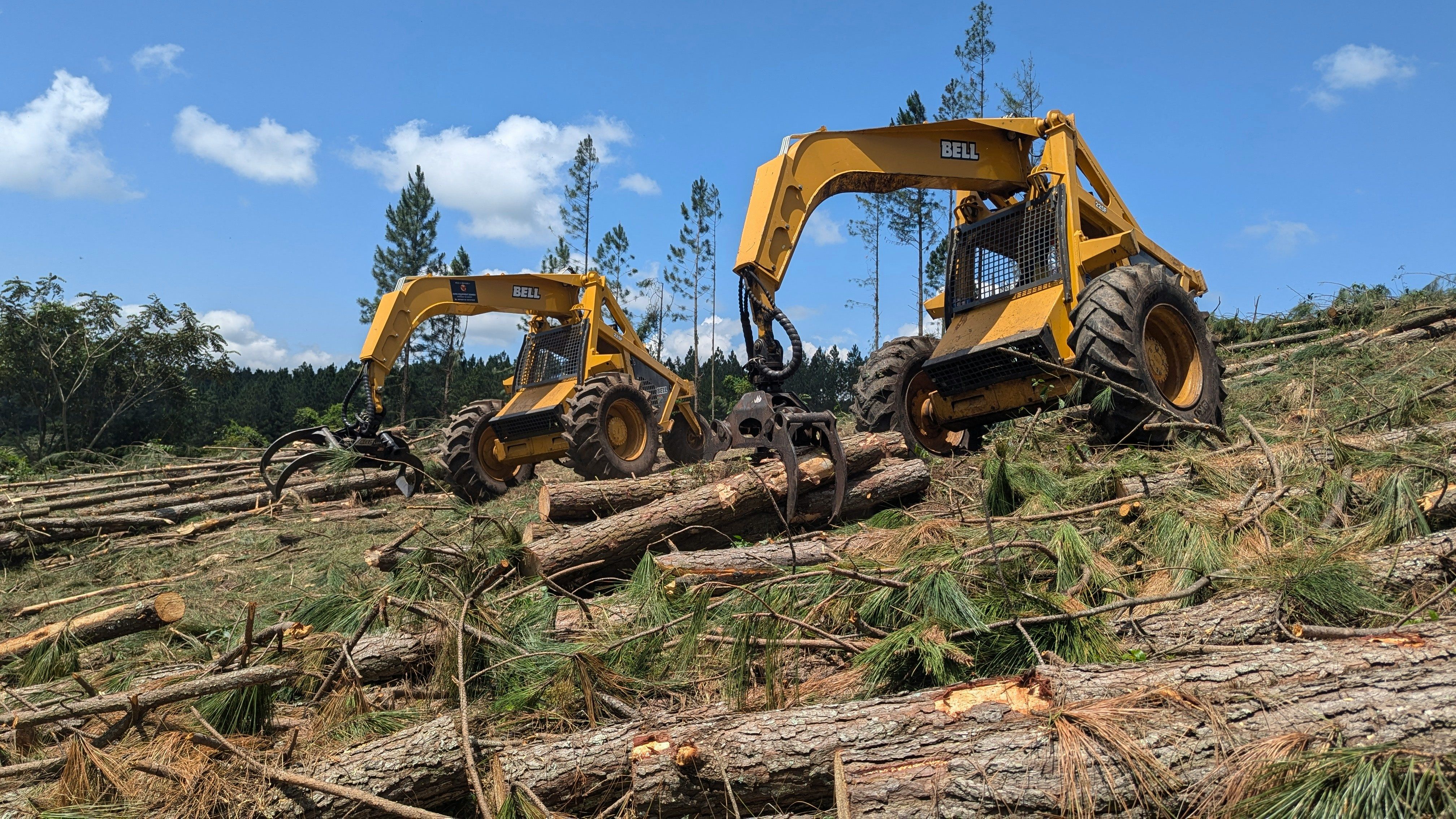
A concrete buggy rental gives a crew a powered carrier that moves wet concrete from the truck or mixer to the spot where it is being poured. You load it, drive it to the forms, and dump the load right where it is needed instead of pushing wheelbarrows by hand. Renting one makes sense when the ready mix truck cannot back up to the pour, when the route crosses rough ground, or when the volume is large enough that hand hauling would slow the crew down. Live Oak Equipment offers a Canycom SC75 tracked concrete buggy for rent to contractors, builders and landowners in West Georgia and East Alabama.
What Is a Concrete Buggy?
Think of a power buggy as a wheelbarrow with its own engine and a much sturdier frame. Crews also call these machines dump buggies because the bucket tips to release the load, so nobody has to shovel it out. Some models are operated by a person walking behind them, while others have a seat for the operator. The Canycom SC75 is a tracked model, which helps when the ground is soft or muddy. You can browse Live Oak’s concrete equipment rental options before you book.
Before choosing any machine, walk the haul route from where the truck will park to the forms. Look for soft ground, slopes, narrow gates, steps and finished surfaces you would rather not cross. Those details decide whether a buggy fits the job. If you are not sure the SC75 suits your route, describe the site when you call and ask whether it is a fit for the job.
When Does a Concrete Buggy Rental Beat a Wheelbarrow?
Wheelbarrows still have a place. For a small stoop, a few post footings or a patch repair, they are fine. The picture changes once the concrete has to travel any real distance or the ground works against you.
- The truck cannot reach the forms. Backyard slabs, additions behind a house and barn pads often sit well past where a loaded mixer truck can safely drive.
- The ground is soft, rutted or sloped. Uneven or sloped terrain can make a loaded wheelbarrow harder to control, which increases the risk of a spill.
- The crew is small. A small crew can struggle to keep up when every load has to move by hand, especially on a long haul route.
- The volume is large. For bigger slabs and footings, plan the route and crew so concrete reaches the forms without dozens of hand trips.
Fatigue is the quiet problem. Pushing wet concrete by hand is heavy work. A power buggy can reduce hand hauling, which lets the crew plan more of its time around placing and finishing.
Pours Where a Buggy Earns Its Keep
| Pour type | Common problem | How a buggy helps |
|---|---|---|
| Slab pour behind a house | Truck stops at the driveway | Can reduce hand hauling when the route and site access suit the machine |
| Footing pour on a graded lot | Long trench runs | Can carry concrete along the forms when the route and machine capacity fit the job |
| Barn or shop floor | Wide area, few access points | Can reduce hand hauling into the building when the opening, route and machine capacity fit the job |
| Small stoop or two footings | Very low volume | Usually not needed; wheelbarrows are enough |
How Much Concrete Can a Buggy Move?
A powered buggy carries far more per trip than a person pushing a wheelbarrow. Capacity varies by model, though, so confirm the figure for the specific machine instead of trusting a rule of thumb. For the unit Live Oak rents, review the Canycom SC75 concrete buggy page, or call 706-392-9614 to ask about capacity, site fit and availability.
How Do You Size the Job?
- Find your total volume. Multiply the length, width and thickness of the slab or footing in feet to get cubic feet (divide inches by 12 to get feet), then divide by 27 to get cubic yards. A 20 by 20 foot slab that is 4 inches thick works out to about 133 cubic feet, or roughly 4.9 cubic yards.
- Measure the haul distance. Walk from where the truck will park to the far corner of the forms and note the real route, not the straight line.
- Check the ground and the access points along that route.
- Count the people you can spare for hauling once placing and finishing are covered.
- Estimate the trips. Divide your total pour volume by the buggy’s capacity, using the same units for both. Then compare that number with the hand trips your crew could realistically manage during placement.
If the route calls for many hand trips, a buggy is worth a serious look.
What Do I Need to Rent One?
Start by calling 706-392-9614 or sending a quote request with your pour date, your location and a short description of the site. Rental terms, availability and any paperwork are confirmed when you book, so ask about them on that call rather than assuming.
Before the pour, get the site ready. Clear the route between the truck position and the forms, and check gate widths and any tight passage the machine has to pass through.
What Other Concrete Tools Go With a Buggy?
A buggy only handles transport. The rest of the pour needs its own equipment. Mixing and finishing tools are covered in our guide to concrete mixers and power trowels in Georgia, which pairs naturally with this one.
The step before the pour matters too. If your site preparation calls for compaction before the pour, look at the compaction equipment available to rent and line it up for the same week so your schedule stays tight.
Frequently Asked Questions
In most cases, yes. Concrete buggy, power buggy and dump buggy usually describe the same kind of powered carrier, one that hauls material to the pour and releases it at the forms instead of being emptied by shovel.
Often it can. Buggies are commonly used to haul loose material such as gravel, sand and mulch as well as concrete. Allowed materials and rated payload depend on the model, so check the SC75’s limits with Live Oak before using it for anything other than concrete.
That depends on the size of the slab and your finishing method. The buggy usually frees up the people who would otherwise push wheelbarrows, so they can screed, float and edge instead. Crew size still needs to match the volume and the setting time.
Live Oak Equipment serves West Georgia and East Alabama, and the Canycom SC75 tracked concrete buggy is part of its rental fleet. Call 706-392-9614 with your location and pour date to confirm availability, talk through site access and request a quote.
Choosing a Concrete Buggy Rental for Your Next Pour
The decision comes down to distance, ground and volume. If the truck can reach your forms and the pour is small, wheelbarrows will do. If the concrete has to travel across rough ground or into a backyard or barn, a machine takes the heaviest work off your crew. Measure the haul route and the volume first, then decide.
Live Oak Equipment rents construction, land clearing and farm equipment to contractors, builders and landowners across West Georgia and East Alabama. For a concrete buggy rental, call 706-392-9614 or request a quote at Live Oak Equipment.